The news broke in the middle of the supermarket, right between the oranges and the greens that were covered in mist. A little girl pointed to the vegetable display and asked her dad, “Why do these three have different names if they are clearly the same?” She was pointing her little finger at broccoli, cauliflower, and cabbage. The dad laughed and said something about “different vitamins” while looking at his phone. He then pushed the cart away, leaving the question hanging in the cold air of the produce aisle.
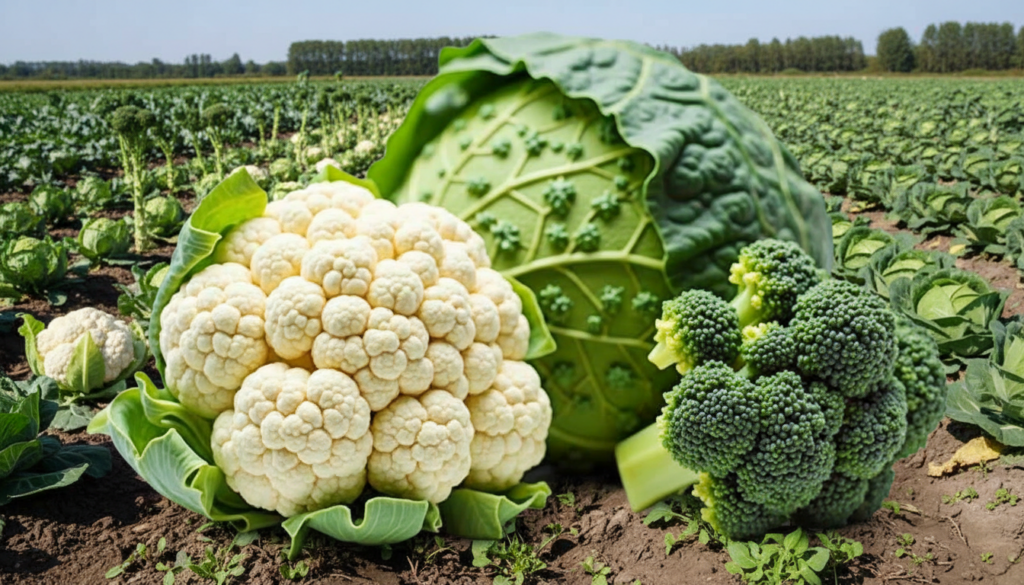
I was holding a head of broccoli and realized I didn’t have a better answer ready. They did look like they were related. Same thick stems, same waxy leaves in different clothes, and the same smell that is a little bit peppery. But in my mind, they were three different worlds, three different recipes, and three shelves in a mental pantry.
What if we’ve been seeing the same plant in three different outfits?
One family is hiding in plain sight in the vegetable aisle.
Take a look at that supermarket display again. You have small white balls of cauliflower, ruffled green heads of cabbage, and little trees of broccoli all under the same thin layer of vapor. Most people just walk by, thinking they have to choose between three different vegetables. Three stories, three choices, and three price tags.

But they all belong to the same species, Brassica oleracea. One plant, cut into many pieces by people and careful selection. The same wild ancestor that used to cling to windy cliffs along the coasts of Europe is now roasted on your sheet pan, sprinkled in your slaw, and steamed on your kid’s plate. If you take your time, you can see the family resemblance.
Plant scientists like to call them “cultivars,” but the short version is that people liked different parts of the same plant. Farmers in the Mediterranean and the British Isles used to save seeds from plants with thicker stems, tighter leaves, or more dramatic flower buds. Over hundreds of years, that quiet habit turned one species into the vegetables we now think of as completely different.
Cauliflower and broccoli are types of plants that have been bred to have flower clusters that are swollen and stopped before they can bloom. Cabbage is the leaf version, twisted into a tight ball of green or red. Kale? Same species again, but this time the leaves are loose and wild. The numbers seem almost funny: dozens of “different” vegetables, but only one Latin name.
It’s not uncommon for nature to play tricks on people who are stubborn. We did something like this with dogs of all shapes and sizes, from chihuahuas to Great Danes, all of which are one type of animal. We did it on our plates instead of our sofas with Brassica oleracea. Once you understand it, the logic is clear: selective breeding is like slowly shaping traits. You change the flavor, size, and shape in small steps. Over time, these nudges become very big: heads of cauliflower the size of a baby’s skull, broccoli with thick, juicy stalks, and cabbage that can last through the winter.
Let’s be honest: no one really thinks about any of this when they’re rushing to buy things after work. You just take what you want and go. That one shared identity, though, is what makes these “different” vegetables cook, taste, and nourish in such similar ways.
How knowing they’re the same plant changes how you shop and cook
When you find out that cauliflower, broccoli, and cabbage are all related, your shopping list gets a little less strict. You stop seeing strict recipes and start seeing a family that can change. No cauliflower for that traybake that was roasted? Instead of broccoli florets, use thickly sliced cabbage wedges that have been brushed with oil. The oven doesn’t care. The plant doesn’t either.
Instead of thinking about each item, try thinking in “Brassica zones” at home. Most things that need one of the three also need the other two. Cauliflower soup with cream? Yes, it works with broccoli. Cabbage salad that is crunchy? Cauliflower stems that have been shaved thinly also work well to hold the dressing. Instead of being thrown away, the stems and leaves become extra ingredients.
When the fridge looks tired on a weeknight, you can really feel this. A sad piece of broccoli, a single half-head of cabbage, and a few cauliflower florets hiding in the back. Not much on paper. You could really make a whole pan of roasted vegetables with garlic and lemon or a quick stir-fry with soy sauce and sesame oil. One plant, three different textures, and a lot of different greens and whites on one plate.
We’ve all been there, that time when you think you “don’t have anything” to cook. Knowing that these types have the same backbone will help you improvise without getting stressed. You start to notice how they are alike instead of how they are different, like how they caramelize at high heat, how they soften and sweeten when braised, and how they stay crunchy even when tender.
From a nutritional point of view, the family resemblance is also very strong. All three types have fiber, vitamin C, and those well-known sulfur compounds that make your kitchen smell a little… strong when you overboil them. Researchers are looking into cruciferous vegetables because of the same compounds that make them great: they may help protect cells and improve long-term health. Different textures, but the same basic tools.

A dietitian laughs and says, “People will fight hard about whether they ‘hate broccoli’ or ‘love cauliflower.'” I talked to them about how their bodies are getting almost the same benefits.
When roasting, use a lot of oil, keep the pan from getting too full, and cook at a high temperature (about 220°C/425°F).
Garlic, lemon, chili flakes, parmesan, tahini, and toasted nuts all go well with the whole Brassica family.
Stem strategy: Peel the tough stems off of broccoli and cauliflower, cut them into thin pieces, and cook them like baby carrots.
If you have leftover cabbage or florets, you can mix them into omelets, fried rice, or grain bowls the next day.
Tip for controlling smells: Cook for less time and leave the lids off to keep the sulfur smell down.
Changing how you think about “different” when the plant is the same
When you think of cauliflower, broccoli, and cabbage as three different types of the same plant, your brain makes a small change. Instead of being a row of different characters, the shelves in the store become a single story about how people change plants to suit their needs. You also get permission to relax, which is strange. You don’t have to have the exact vegetable that a recipe calls for to feel like you’re “doing it right.”
This knowledge can spread in small, useful ways. You waste a little less because that tough-looking stem is now visible. You spend a little less because you’re willing to buy the freshest or cheapest Brassica that week, knowing you can adapt. You might also be able to cook more creatively, knowing that the same plant will behave in ways you know and forgive in your pan or pot.
In a different way, it reminds us that our categories aren’t always as strict as we think. One species, many names. One wild coastal plant that is now on millions of tables, roasted with a drizzle of olive oil. Even though cauliflower, broccoli, and cabbage all come from the same plant, they don’t taste or look the same. But this shared root gives them a quiet connection in our minds. It’s hard to forget about that line once you know it’s there, and it might change how you feel about the next head of “whatever’s on sale” in the produce aisle.
| Key point | Detail | Value for the reader |
|---|---|---|
| One species | Cauliflower, broccoli and cabbage are all Brassica oleracea varieties | Helps you swap and improvise with less stress |
| Shared cooking behavior | They roast, stir-fry and braise in similar ways | Opens up more easy, “use-what-you-have” meals |
| Common nutritional profile | All bring fiber, vitamin C and cruciferous compounds | Gives confidence that substitutions still support health goals |
Questions and Answers:
Is it true that broccoli, cauliflower, and cabbage are all the same plant? Yes. They are all cultivated types of the same species, Brassica oleracea, that have been chosen over hundreds of years for their flower heads (broccoli, cauliflower) and leaves (cabbage).
Can I always switch one for the other in recipes? Not all the time, but a lot of the time. Soups, roasts, stir-fries, gratins, and salads are usually easy to change. You might have to change the cooking times and sizes of the cuts to get the right textures.
Do they all have the same vitamins and minerals? They both have a “base” of cruciferous foods that includes fiber, vitamin C, and plant compounds, but the amounts are different. For example, broccoli has a little more of some vitamins per gram than plain green cabbage.
Why does my kitchen smell when I cook them? That comes from sulfur-containing compounds that are common in cruciferous vegetables. The smell gets stronger when you cook it longer and add more water. Shorter, high-heat methods make it less spicy.
Are Brussels sprouts and kale related too? Yes. Kale, Brussels sprouts, kohlrabi, and savoy cabbage are all members of the same species family. The plant has a passport with the same Latin name, but it looks different.