A gut message that says “no thanks” to sugar
Researchers from Jiangnan University in China have found a biological circuit that connects microbes in the gut, hormones in the blood, and the brain’s appetite centers.
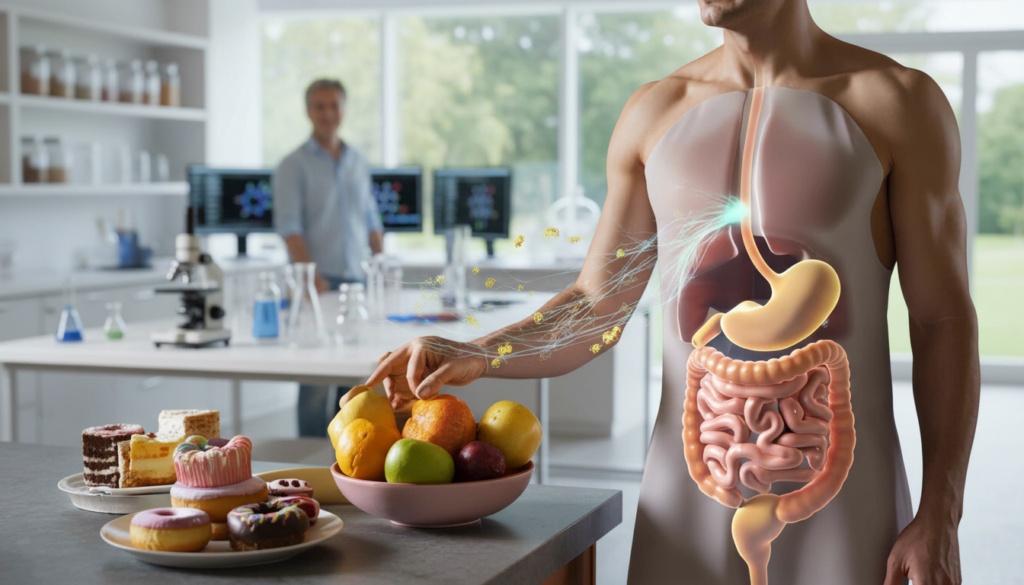
The main focus of the work is a bacterium called Bacteroides vulgatus, which is already found in many human guts. In laboratory and animal studies, this microbe and its byproducts initiated a signal that diminished sugar cravings and enhanced glycemic regulation.
This natural gut-hormone loop works like popular GLP-1 drugs, but it starts with microbes instead of a needle.
The discovery supports a growing idea: our cravings aren’t just about taste or willpower. Signals coming up from the intestines, where food, microbes, and hormones are always interacting, have a big effect on them.

Ozempic and GLP-1: A Broken Signaling System
A lot of people with type 2 diabetes have a GLP-1 system that doesn’t work as well. GLP-1 is a hormone made in the gut that helps the body release insulin, lower blood sugar, and make you feel full after eating.
Ozempic and other new drugs work like GLP-1. They make that signal stronger, which helps patients control their blood sugar and, in many cases, lose weight. But these medicines can make you feel sick, upset your stomach, and have other side effects. They are also costly and not everyone can get them.
The new research points to a different way: instead of giving people GLP-1 mimics, use the microbiome to make the gut make more GLP-1 on its own.
The body may be able to get its GLP-1 response back and stop wanting sugary foods by changing the balance of microbes.
The most important parts of the gut-sugar circuit
The study emphasizes numerous biological entities that collaborate akin to a relay team:
Ffar4: a protein that acts as a receptor in the intestines and helps some bacteria, like B. vulgatus, grow.
Bacteroides vulgatus is a type of bacteria that lives in the gut and makes chemicals that can change the release of hormones.
GLP-1 is a hormone in the gut that helps insulin release and controls appetite.
FGF21 is a hormone that is mostly made in the liver and is linked to how much sugar you like and how much energy you use.
Microbial metabolites are tiny molecules made by B. vulgatus that cause GLP-1 to be released.
The team looked at blood samples from 60 people with type 2 diabetes and 24 healthy volunteers. They found that changes in the Ffar4 gene were linked to lower levels of FGF21. People with this problem tended to like sweeter foods more, which could make diabetes worse or lead to its development.
What the experiments with mice showed
Researchers used mice to figure out how the mechanism works. They saw a clear hormonal chain reaction when they gave the animals a metabolite made by B. vulgatus.
| Step | What happens in the body |
|---|---|
| 1 | B. vulgatus or its metabolite interacts with the intestine. |
| 2 | Gut cells release more GLP‑1. |
| 3 | Increased GLP‑1 stimulates secretion of FGF21. |
| 4 | FGF21 reaches the brain and reduces interest in sugary foods. |
| 5 | Blood sugar control improves as the body handles glucose more efficiently. |
When you change what you say in your gut, your brain starts to want less sugar.
Why this could be important for people
There are a few pieces of evidence that suggest this mechanism is important for more than just mice.
Studies on people have shown that people with certain FGF21 gene variants are about 20% more likely to eat a lot of sugary foods.
Researchers have found that GLP-1 agonist drugs already on the market raise FGF21 levels in mice, which fits with the new findings.
B. vulgatus is a natural part of the human gut microbiome, so many of us already have it in our bodies.
The authors propose that focusing on this microbial-hormonal axis could present a novel preventative approach for type 2 diabetes, emphasizing microbiome modulation over pharmacological interventions.

Towards a microbial substitute for weight-loss injections
Ozempic and other GLP-1 drugs are very popular for both diabetes and weight loss. But access isn’t equal, long-term data is still coming in, and some patients have trouble with side effects or stop treatment.
A therapy based on stimulating or supplementing microbes like B. vulgatus could, in theory, be a more affordable and less harsh option for some people. This could look like:
a targeted probiotic capsule; a specific microbial metabolite used as a drug; or dietary strategies that promote the proliferation of GLP-1-enhancing microbes.
Instead of giving the body a strong drug, the goal would be to change an existing ecosystem so that it works in our favor.
Any such method would still need to be tested very carefully. Microbes act differently in different people, and changing the microbiome can be risky, causing things like stomach pain and changes in other types of bacteria.
What this means for sugar cravings in everyday life
This study supports the notion that cravings are partially biological signals generated beneath the threshold of conscious awareness. The brain may push harder for quick sugar hits when FGF21 levels go down or gut signals get messed up.
In real life, that could help explain why some people feel like they have to have sweets, while others can walk past the dessert table without even thinking about it.
Future treatments based on this pathway may enhance, rather than supplant, existing dietary and exercise recommendations. A person with type 2 diabetes might mix:
A microbiome-targeted therapy that raises GLP-1 and FGF21, a high-fiber diet that feeds good microbes, and existing medication, if needed, under the care of a doctor.
The combined effect could make you want sugar less, make your blood sugar levels less unstable, and, over time, put less stress on your pancreas and blood vessels.
Important words and what they really mean
The long list of hormone names can be confusing for people who aren’t experts. A few definitions can help make things clearer:
GLP-1 (glucagon-like peptide-1) is a hormone that the gut releases after eating. It tells the pancreas to make insulin and the brain to stop eating.
FGF21 (fibroblast growth factor 21) is a hormone that is mostly made by the liver. It helps control how our bodies use sugar and fat, and it seems to change how much we like sweet foods.
Microbiome: the whole group of microbes in the body, especially in the gut, that interacts with hormones, nerves, and immune cells.
Metabolites are tiny molecules that microbes make when they break down food. These molecules can send signals to human cells.
Putting these pieces together, the picture that is starting to form is less about one “miracle” bacterium and more about a well-tuned network. Drugs that work on GLP-1 show that this network can be pushed with medicine. The new study shows that it can also be changed from the microbial side, which is closer to where the signal starts.
People with type 2 diabetes or who have strong sugar cravings will find that idea appealing. Any future treatment based on this mechanism will need strict clinical trials, clear safety data, and realistic goals. The idea that a quiet message from the gut could help people say “no” to sugar is becoming more accepted by scientists. This could change the way medicine thinks about appetite in the future.