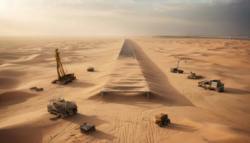
The desert night near Neom airport feels unsettling in a distinctly modern way. Harsh floodlights carve through the darkness, revealing cranes paused above concrete foundations that were once meant to run like a futuristic ribbon across 100 miles of sand. Engineers in reflective jackets stand around folding tables, sipping sweet tea and studying architectural models that already seem outdated. A supervisor scrolls through his phone, reading headlines in Arabic and English repeating the same quiet admission: Saudi Arabia’s boldest urban experiment, The Line, is being scaled back.
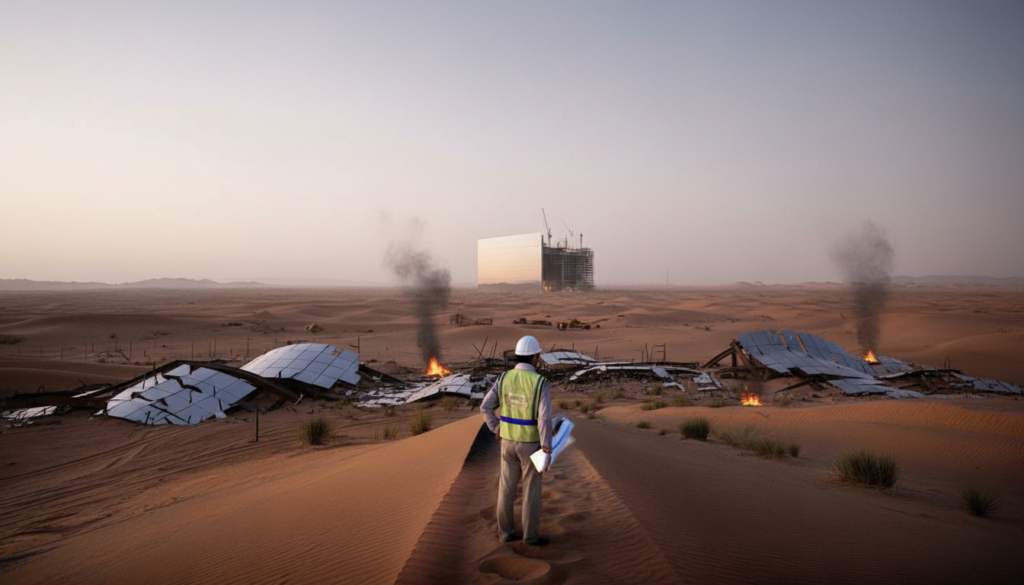
From 100-Mile Dream to Measured Reality
When Crown Prince Mohammed bin Salman introduced The Line in 2021, it sounded like something lifted from speculative fiction. A 170-kilometer linear city slicing through the desert, twin mirrored facades rising 500 meters high, no cars, no traditional streets, entirely powered by renewable energy. It promised housing for nine million residents stacked in vertical neighborhoods where daily life would unfold within a five-minute walk.
But recent statements from Saudi officials now emphasize “phased development.” Analysts interpret that phrasing more bluntly: fewer kilometers, fewer residents, and a narrower scope than originally envisioned.

A consultant who worked on the project recalls a late-2023 internal meeting. The presentation still displayed the iconic 170-kilometer bar stretching across the Red Sea coastline. Beside it, however, a shaded portion marked “Phase 1 – 2.4 km” told a different story. The room reportedly grew quiet as attendees absorbed the contrast between the grand marketing vision and the immediate financial realities. What had been presented as a civilization-defining leap began to resemble an extraordinarily expensive pilot.
Rising construction costs, global inflation, higher interest rates, and the sheer complexity of building in remote desert terrain all compounded the challenge. Meanwhile, Saudi Arabia continues investing heavily in other mega-developments, from Red Sea resorts to sports infrastructure and entertainment cities. Even vast oil revenues have limits, and prioritization became inevitable.
Ambition Reconsidered in a Changing World
The shrinking of The Line has triggered mixed reactions across urban planning and climate circles. For some, the project represented a bold rethinking of how cities could function—dense, walkable, energy-efficient, and built around public transit rather than private vehicles. In a warming world, those principles are not aesthetic choices; they are survival strategies.
Yet critics argued that placing such a massive structure in a fragile desert ecosystem, while displacing local communities and wildlife, raised serious ethical concerns. The governance model behind the project also drew scrutiny, with decisions centralized and financial details often opaque.
For architects and planners who admired its audacity, the scaling back feels bittersweet. One young architect from Jeddah described feeling both skeptical and inspired when she first saw the concept. To her, the ambition itself mattered. If even a resource-rich nation hesitates to pursue something so radical, she wondered, who else will attempt large-scale experimentation in urban design?
The tension reflects a deeper global dilemma. Humanity urgently needs dense, transit-oriented development to reduce emissions. Yet most cities evolve incrementally—adding bus lines, retrofitting buildings, improving insulation—rather than reinventing themselves overnight. The Line sat awkwardly between visionary transformation and overwhelming spectacle.
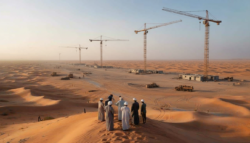
Lessons That Survive the Downsizing
Stripped of its mirrored façades and promotional imagery, The Line functioned as a vast laboratory. Urban planners, climate scientists, engineers, and technologists explored ideas that most cities postpone indefinitely. They modeled microclimates between high-rise structures, experimented with AI-driven energy management, and tested new approaches to modular construction and district cooling.
Even if the full 170-kilometer vision never materializes, that knowledge does not vanish. The engineers and designers involved carry their experience into future projects. Concepts refined for extreme conditions can inform more conventional developments in other regions. Innovations in vertical density, transit integration, and energy efficiency may quietly filter into ordinary neighborhoods worldwide.
Large prototypes rarely unfold exactly as imagined. History shows that scaled-back visions can still produce valuable tools, data, and trained professionals. The question is not simply whether The Line succeeds or fails in its original form. The more important issue is whether cities elsewhere can adapt and apply the useful elements without replicating the excess.
A Smaller Line, A Larger Reflection
The gradual contraction of The Line is more than a domestic adjustment; it reflects global uncertainty about the scale of transformation societies are prepared to undertake. Many nations want rapid climate solutions without deep disruption to existing lifestyles. The Line embodied that tension—offering a futuristic, zero-car city while demanding extraordinary capital and centralized control.
As the project narrows, observers interpret it in different ways. Some see prudence replacing overreach. Others view it as hesitation at a moment that demands bold action. Perhaps the truth lies somewhere in between: the original concept was both imaginative and risky, visionary yet financially daunting.
What remains is a broader conversation about risk, governance, and ambition. How much public experimentation is acceptable in pursuit of climate resilience? How do we distinguish meaningful innovation from architectural spectacle? And when the next grand urban vision appears—whether in a desert, on reclaimed coastline, or in orbit—will policymakers and citizens evaluate it with sharper questions and clearer eyes?
| Key point | Detail | Value for the reader |
|---|---|---|
| Saudi Arabia is scaling back The Line | The original 170 km, 9-million-resident city is being reduced to a much smaller, phased pilot | Helps readers cut through hype and understand what is actually being built |
| The “failure” still creates useful knowledge | Design methods, tech solutions and trained experts will migrate to more ordinary projects | Shows how even abandoned mega-visions can shape the cities we actually live in |
| Debate between ambition and responsibility | The world is torn between celebrating restraint and fearing the loss of bold experimentation | Invites readers to reflect on what kind of risks they want governments to take for the future |